1
/
of
5
My Store
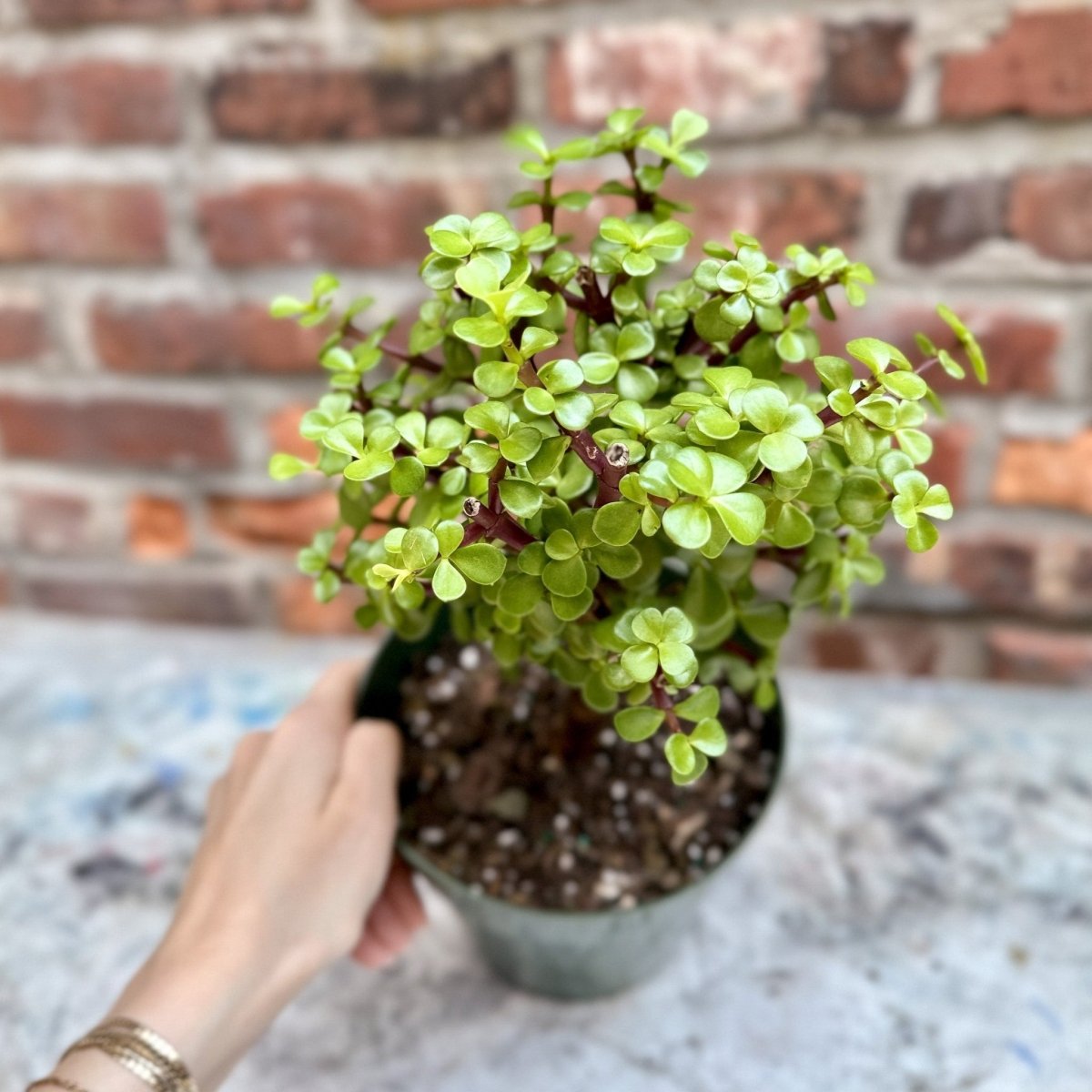
Portulacaria Afra - Elephant Bush - Various Sizes
Portulacaria Afra - Elephant Bush - Various Sizes
Regular price
$28.00 USD
Regular price
$38.00 USD
Sale price
$28.00 USD
Shipping calculated at checkout.
Quantity
Couldn't load pickup availability
Bring Vibrancy to Your Indoor Space with the Elephant Bush The Elephant Bush (Portulacaria afra) is a low-maintenance, air-purifying succulent that brings a lush, colorful touch to any indoor environment. Known for its thick, fleshy leaves and bushy appearance, this plant can thrive even in low-light areas, making it an excellent choice for offices and shaded rooms alike. Not only does it add greenery to your space, but it also helps improve air quality by absorbing carbon dioxide and releasing oxygen. Elephant Bush Plant Profile Botanical Name: Portulacaria Afra Pronunciation: por-tew-luh-KAR-ee-uh AF-ruh Common Name: Elephant Bush, Elephant’s Foot, Miniature Jade Plant Family: Portulacaceae Native Range: South Africa, Swaziland Elephant Bush Care Guide Care: Easy Light: Prefers bright to bright indirect Water: Allow the soil to dry out completely between watering. Is drought tolerant Humidity: Can tolerate average home humidity Temperature: 45-90F Pruning: Prune as needed to remove brown or dead leaves and control growth. Feeding: Fertilize as needed during spring and summer Propagation: Stem or leaf cuttings Growth: Slow growing Pests: Look out for mealy bugs Toxicity: Toxic to humans and pets Fun Fact About the Elephant Bush The Elephant Bush, also known as the Dwarf Jade Plant, is native to South Africa and is an important food source for elephants in the wild, which helps with natural pruning and propagation in its native habitat. This succulent is often mistaken for the jade plant, but it’s more lightweight and grows faster! Cultivar History of the Elephant Bush The Elephant Bush has a fascinating history as a vital plant in African ecosystems. Its origins trace back to arid regions of South Africa, where it’s commonly found growing on rocky hillsides and in open woodlands. Not only does it serve as a dietary staple for elephants, but it also plays a crucial role in preventing soil erosion and aiding in water retention in the regions where it grows.
View full details